We know you’ve been busy this summer – but we got you covered with the below summary of some of the key summer changes on the topic of EPR in Europe. The described latest news around EPR developments in Europe include public consultations, decrees publications as well as some of the latest reports published in the sector!
Before diving into sector-specific updates, a major cross-sectoral study sets the scene for the future of Extended Producer Responsibility : contributed by Circulearth for the European Commission, a recent report analyzes 27 research and innovation projects to inform the forthcoming Circular Economy Act. Looking across multiple key value chains – including packaging, electronics, construction, and textiles – the study emphasizes that EPR must evolve beyond traditional waste management. To successfully scale circular business models across Europe, the report highlights the critical need to overcome fragmented national systems by harmonizing regulations, leveraging digital infrastructures like the Digital Product Passport, and strengthening economic incentives for eco-design and secondary material markets.
WEEE
On the publication side:
- EU: The European Environmental Bureau (EEB) published a policy brief, “Rewiring Producer Responsibility for E-Waste,” on August 27th, 2026, calling for key harmonised measures for the EPR scheme for WEEE, including defining clear responsibilities across actors of the value chain, extending cost coverage to waste prevention, or ending free-riding by online sellers.
- France: To mark the 20th anniversary of the EPR scheme for WEEE, FEDERREC, the French association of recyclers, published a report on the system’s evolution since its establishment and its challenges ahead of the coming revision of the WEEE Directive.
Batteries
On the policy side:
- EU: Under the EU Battery Regulation, key labeling requirements (such as capacity, lifespan, QR codes, and recycling instructions) entered into mandatory application on August 18th, 2026. Producers placing industrial or transport batteries on the market must also finalize their carbon footprint methodology documentation ahead of the 2027 Digital Battery Passport roll-out.
On the publication side:
- EU: Following a JRC report released in mid-July, the European Commission launched a public consultation, running until September 9th, on a draft delegated act and its annex stemming from Article 8 of the Battery Regulation. This text establishes a mass-balance framework methodology for calculating and verifying the recycled content of cobalt, lithium, nickel, and lead in several battery categories. This methodology prepares for the mandatory recycled content declarations that will be required from manufacturers starting in August 2028 at the earliest. Final adoption by the Commission is slated for the autumn.
End-of-life vehicles
On the policy side:
- EU: The European Parliament approved in June a new regulation, pending final Council approval, that enforces circular economy principles across the automotive sector by introducing recyclability design requirements, mandatory recycled content targets, extended producer responsibility, and stricter export rules.
Textiles
On the policy side:
- Europe: Since July 19th, the ban on unsold goods has entered into force.
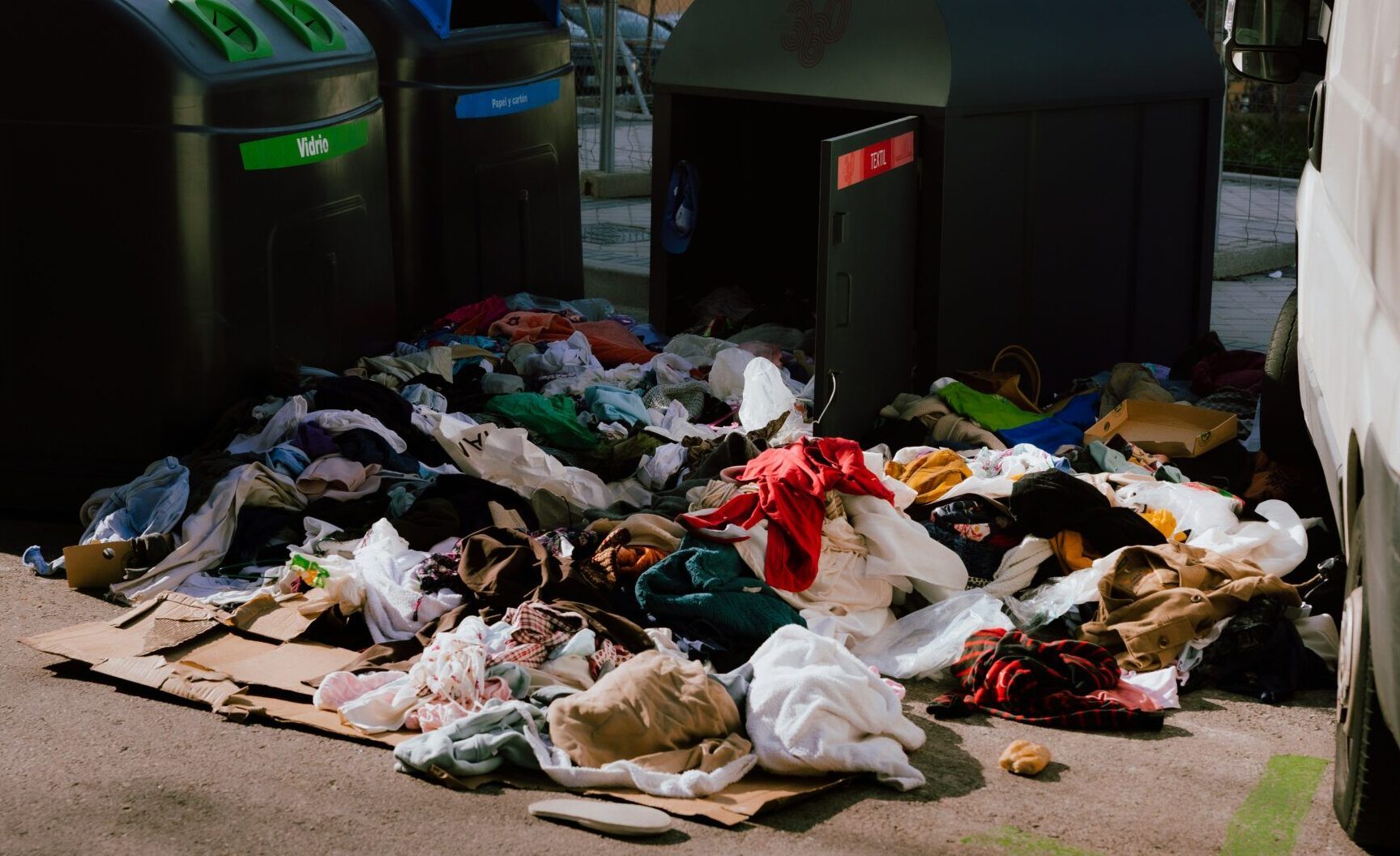
- France: The French Ministry of Environment released its textile EPR technical specifications for public consultation until July 31st. It collected more than 300 contributions. While the final and full official release of the technical specifications is expected in the autumn, a decree published on August 28th introduces a new penalty for 12 product categories. Such penalties, ranging from 0.5 EUR/product up to 12 EUR/product in 2026 and 2027, are applicable to producers depending on their commercial practices and the repairability of the product. The full details about the conditions and definitions of commercial practices and repairability of the products will be published as a note on the website of the Ministry of Environment. For more information, please read our latest article here.
- Italy: On July 23rd, the draft decree for the EPR scheme for Textiles was approved by the Unified Conference, making EPR for textiles a closer reality in Italy. A revision by the Council of State before and the Minister’s signature are needed before it can be published in the Official Gazette.
- Ireland: The Department of Climate, Energy and the Environment released its draft EPR plan for public consultation before September 9th. This draft indicates how the scheme will be designed. With a product scope following the WFD, the draft only establishes one key collection target, but not yet reuse or recycling ones. Only one PRO will be allowed by the Ministry by Q1 2027.
- Norway: The public consultation on the Norwegian EPR schemes for textiles closed on August 21st. This draft does not yet offer numerical collection and recycling targets.
- Spain: Spain’s Ministry for Ecological Transition and the Demographic Challenge notified the European Commission of its textile EPR decree on May 27th, 2026.
After August 28th, Spain can either proceed to adopt the decree (if no objection is raised), or if objections arose, the standstill period will be extended by three months. In this case, Spain is expected to respond to the concerns or amend the text.
On the publication side:
- Germany: Launched by the Confederation of the German Textile and Fashion Industry (textil+mode) and the German Retail Federation (HDE), Allianz für textile Kreisläufe aims to influence the design of Germany’s forthcoming Extended Producer Responsibility scheme for textiles and footwear.
- Global: WRAP released on June 23rd the report “Set Up for Success: What can global EPR schemes teach the textiles sector?”
Furniture
On the policy side:
- Italy: The Italian Ministry of Environment and Energy Security (MASE) released a public consultation on the proposed Regulation establishing an EPR scheme for furniture and furnishing products. The consultation period was recently extended by a further 15 days, giving stakeholders until September 18th to submit their comments.
Packaging
On the policy side:
- UE : Le règlement sur les emballages et les déchets d’emballages (PPWR) est entré en vigueur le 12 août. Suite à cette étape importante, la Commission européenne a lancé trois appels à contributions le 14 août afin de préparer la législation secondaire définissant les objectifs de contenu recyclé pour 2030 :
- Two implementing acts focusing on (1) the calculation and verification of recycled plastic content in packaging, and (2) sustainability criteria for plastic recycling technologies.
- One delegated act establishing conditions for importing recycled plastic or plastic-containing goods from third countries.
- These public consultations are open until September 16th, with final adoption expected in Q4 2026.
- EU: Another key implementing act aimed at harmonizing national Packaging EPR rules, including mandatory producer registers and reporting procedures, is under consultation until September 10th.
- EU: The European Commission also updated its PPWR Q&A at the beginning of August.
- France (commercial and industrial packaging): The Ministry of Ecological Transition opened a public consultation on August 10th (closing September 10th) regarding a draft decree officially postponing the enforcement of the Commercial & Industrial (C&I) Packaging EPR scheme to January 1st, 2027.
- France (emballages ménagers) : Un projet de nouveau cahier des charges est ouvert à la consultation jusqu’au 10 septembre. Les éléments clés comprennent :
- A revamp of local authority financial support, replacing standard allocations with performance-based contracts to be signed by June 30th, 2027 (€150M/year allocated for 2027–2029).
- Dedicated funding for reuse schemes (€50M in 2027 to deploy a national system).
- Higher eco-penalties on unnecessary or oversized packaging and small plastic bottles.
Germany: Germany’s new Packaging Law Implementation Act (Verpackungsrecht-Durchführungsgesetz – VerpackDG) was published in the Federal Law Gazette on July 17th, replacing the former Packaging Act (VerpackG). The VerpackDG entered into force on August 12th, aligning national enforcement and licensing provisions (including LUCID registry updates) with the EU PPWR, which became directly applicable on the same date.