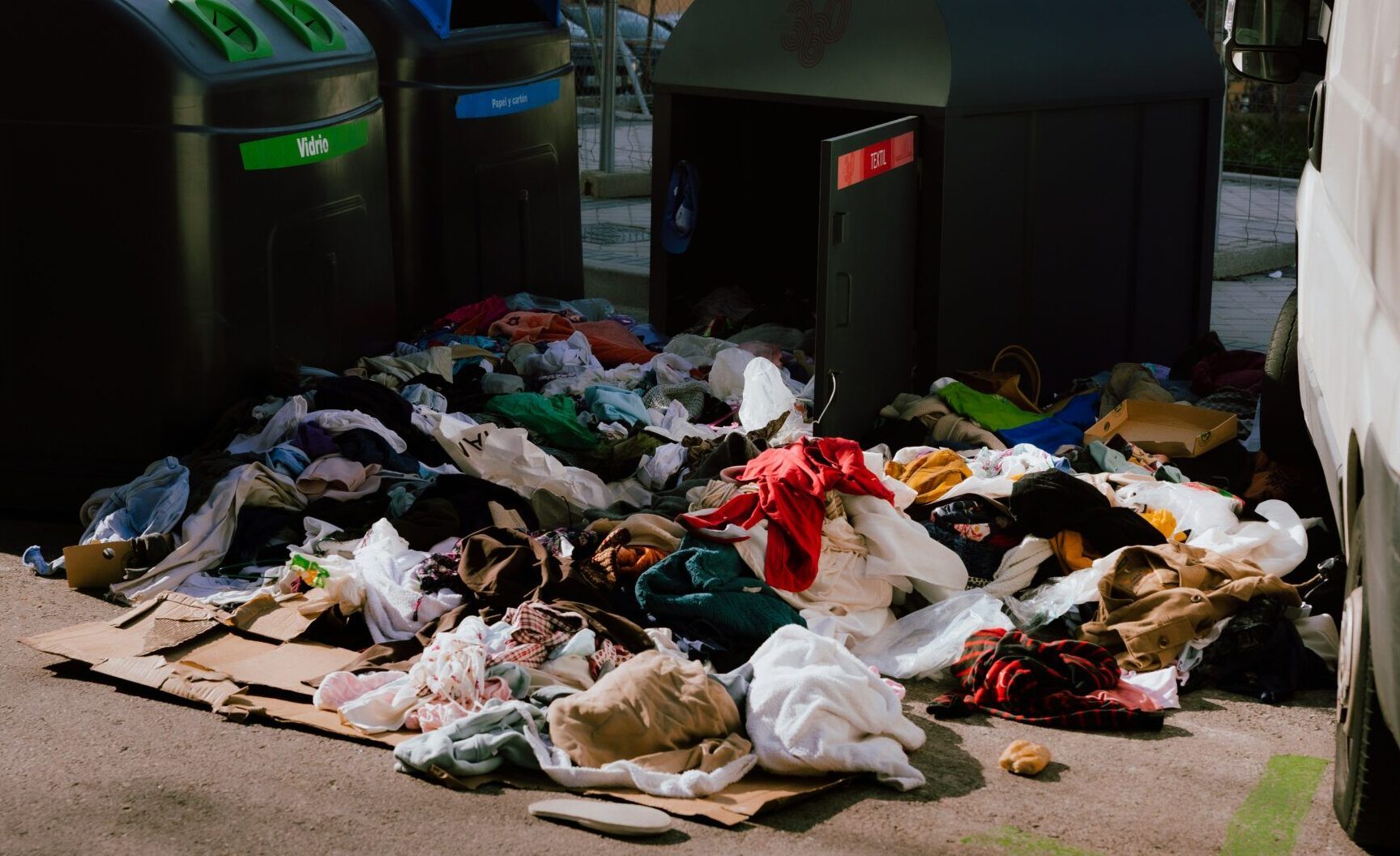
The French anti-fast fashion law (LOI n° 2026-602) (LOI no 2026-602) was long awaited, but its final version is the result of a complex two-year legislative process. First adopted unanimously by the National Assembly in March 2024, the bill was stalled by the June 2024 parliamentary dissolution, heavily amended by the Senate in June 2025, and delayed by strict regulatory checks from the European Commission in late 2025. Following a final parliamentary compromise, it was officially adopted on June 29th, 2026, and enacted by the French President on July 8th, 2026.
The law defines what ultra express fashion is, includes requirements for manufacturers conducting ultra express fashion practices, imposes greater traceability and transparency for consumers of such products, leverages EPR system’s power by allowing new eco-modulations criteria, and restricts advertising and marketing practices for ultra express fashion products and organizations.
Despite its successful adoption, some industry stakeholders deplore how far the text has landed from its original version, leaving some disappointed about the real leverage the law could have had to reduce the environmental impacts of the textile industry and to protect consumers and citizens.
However, for companies, the impact is immediate with the application of the first penalty scales as of September 1st, 2026.
What was originally in the law?
First introduced by MP Anne-Cécile Violland, the original drafyl adopted by the National Assembly in March 2024 was far broader and stricter. It was built around three main pillars:
- A broad definition of fast fashion: It targeted the entire fast-fashion sector based on criteria like the volume of new items introduced, the speed of collection turnover, and short product lifespans—without restricting the focus solely to ultra-fast fashion platforms.
- A total advertising ban: Commercial communications promoting fast fashion brands were entirely prohibited, including direct brand marketing and sponsored content via social media influencers.
- Explicit and progressive financial penalties: Under the EPR framework, items were subject to a clear bonus-malus penalty schedule starting at €5 per item in 2025 and rising to €10 per item by 2030, directly tied to France’s upcoming environmental labeling system.
Between 2024 and 2026, two major events significantly reshaped the scope of the bill:
- Firstly, the Senate rewrote the proposal in June 2025. Following delays caused by the June 2024 parliamentary dissolution, the Senate narrowed the legal scope from general “fast fashion” to “ultra-express fashion” (mode ultra-express). This shift concentrated constraints on high-volume online pure-players while effectively excluding most traditional European retailers.
- Once notified to the European Commission on 27th June, 2025, the text faced two formal detailed opinions (avis circonstanciés). The Commission raised major incompatibilities with EU law—notably pointing out that a blanket advertising ban violated the E-Commerce Directive’s country-of-origin principle and overlapped with the Digital Services Act (DSA), while penalty criteria conflicted with the EU Waste Framework Directive. This pushback was further amplified by several member states: Sweden issued its own detailed opinion contesting France’s attempt to derogate from the E-Commerce Directive without a proper impact assessment, Poland criticized the vague definition of “ultra-express fashion” as a threat to cross-border trade while demanding the removal of the Senate’s small-parcel tax, and Luxembourg submitted formal observations against the draft.
These objections forced French lawmakers back to the drafting table in late 2025 and early 2026. To save the bill from complete EU invalidation, the advertising ban was adjusted, and EPR penalties were unlinked from full environmental labeling to focus instead on a specific “durability coefficient.”
How your organization might be impacted?
New definition of ultra express fashion practices
The AFFL sets two criteria to define what the ultra express fashion is:
- the number of new product references (SKUs) placed on the market
- the lack of incentive to repair such products
The thresholds of the size of the range and the criteria enabling product repairs will be defined by decree (Article 1.V). The impact of the law and the width of its scope is therefore yet to be determined.
However, paragraph II of Article 1 precises that the number of product references covered by the law are all the product references proposed by the physical or moral person except if such person can justify that its online sales channel is not its primary one. Therefore, traditional fashion giants with a significant store turnover model are exempted from the law. This is one of the main criticisms made by environmental NGOs.
Greater traceability and transparency for consumers shopping online
The AFFL prescribes that the ultra express fashion producers selling online (through a market place, a platform, or any other similar tool) shall publish messages online that favor sobriety, reuse, repair and recycling of products and information on the social, environmental and health impacts of the products, including precisions of the environmental impacts of product delivery (Article 1.III).
The manufacturing location of sold articles online must be displaced on the selling platform with a font size as important as the price information and in its immediate vicinity (Article 2).
Leveraging EPR modulations to transform business practices
The AFFL leverages the role of EPR modulations to drive the transformation of product offerings. Indeed, the Article 5.2 of the AFFL enables EPR fees to be modulated depending on the industrial and commercial practices of producers which influence the time of use of the product and its probability to become waste.
Crucially the law introduces financial penalties under Article 5.3c) : EPR fees can be modulated depending on the width/size of the product range and the renewal frequency of the product range as well as being modulated based on how products are being incentivized for repair. Such penalties may not exceed 50% of the product’s selling price excluding tax, and products penalized under this mechanism cannot benefit from EPR bonuses.
Calculation methodology detailed on August 24th, 2026
The practical application of these penalties was recently clarified through a ministerial decree published on August 24th, 2026, which amends the EPR technical specifications for textiles, footwear, and household linen (TLC). Entering into force on September 1st, 2026, the decree sets out a precise mathematical formula to determine a product’s durability score (D), based on two evenly weighted criteria: product range width (G) and repair incentives (R):
| D=0,67+(1,45−0,67)×(0,5×G+0,5×R) |
If a product receives a durability score D≤0.8, specific unit penalties apply depending on the product category, out of the 12 product categories covered. For example, in 2026, the penalty stands at €2 for a T-shirt, €7 for a pair of trousers, €9 for jeans, and up to €12 for a coat, before gradually increasing through 2030. The definitions of product range thresholds and repair incentives criteria are yet to be determined and shall be communicated as a note on the website of the Ministry of Environment. This act has been notified to the European Commission.
Reframing which advertising practices are allowed
The French Environmental code now incorporates a ban on the advertisement of products which belong to ultra express fashion practices or of brands that perform such business activities (Article 6). It also bans commercial influencers from promoting directly or indirectly ultra express fashion products and defines a fine of up to 100 000 euros for such infringement as of January 1st, 2027. The use of “free” as a marketing claim is specifically prohibited.
Potential expansions of the carbon credits mechanism
Within 6 months of the law enactment (January 2027), the government delivers a report studying a possibility to expand carbon credits mechanisms to apparel products which are manufactured outside of the EU to the Parliament (Article 10).
The CBAM is an EU climate tool designed to put a carbon price on imported goods to prevent “carbon leakage” and level the playing field between EU and non-EU manufacturers.
Strengthening enforcement for non-french sellers
To ensure foreign brands and cross-border platforms cannot evade French Extended Producer Responsibility (EPR) regulations, the Articles 5 (2) creates a statutory requirement for any non-established producer (whether inside or outside the EU) to appoint a written representative (mandataire) based in France. Unlike a simple administrative agent, this representative is legally subrogated into all the producer’s EPR duties—taking on direct legal liability for compliance, reporting, and payment of EPR eco-contributions (including the new eco-modulation penalties).
What would the organization anticipate ?
- Stay up to date on the upcoming French EPR specifications which are expected in the autumn 2026. Read our last article to know what to expect!
- Appoint a French EPR authorised representative (for non-French entities): If your organization is based outside of France, secure a formal written mandate with a France-established entity to handle your EPR compliance and subrogation liabilities immediately.
- Get an understanding of the number of SKUs you are selling and on which channels.
- Identify of all existing material available in your company on products repairs
- Inform your communication and marketing departments about the advertising ban
- Inform your e-channel department and teams about the upcoming visibility requirements of manufacturing sites on product pages.
- Stay up to date on the upcoming decree which will precise the number of references and the criteria for repair incentives.